My Tamil Nadu travel story was featured in the January/February Issue of India Today's Travel Plus. I've uploaded the pdf; you can read it below by using the zoom keys.
Showing posts with label writing. Show all posts
Showing posts with label writing. Show all posts
Monday, January 28, 2013


Sunday, January 6, 2013
Swallowing
My food adventure story was featured in the December Issue of India Today's Travel Plus. I've uploaded the pdf; you can read it below by using the zoom keys, or you can download a copy to read on your own pdf reader.
Food
Food
Monday, October 29, 2012
Extract here here and here

Not Only the Things That Have Happened will be in bookstores across India in just a couple weeks.
Yesterday, DNA published an extract from the novel. Here is the story of Saramma as she returns to her family after living as the sexual keep of a wealthy man.
Pyrta and Pratilipi ran extracts when the novel was still a work in process. Here is the story of Kallen Chothi and the rubber-tappers’ strike, backdrop for the barber, Unnikrishnan, remembering Annakutty.
And here it is sometime in the 1970s. A little boy, Chuk Chuk has been taken from the railway platform in New Delhi where he has made a home for himself with other street children; he is adopted by a family in a small city in the Midwestern United States. They rename him Asa. It is the first night and day of his life with them.
You can read a bit more about the novel in an interview Platform Magazine(see the post below this one).
Sunday, September 2, 2012
India Cheap and Best
 I was recently asked to list some of my favorite things about India. The editor at Marie Claire ran seven of the ten things I listed. Here's the un-edited version.
***
Delhi at night
is expansive;
under cover of dark the silent and the acquiescent break into laughter,
housewives still dressed in day time drabbery show off faces painted for the
night; trees breathe and so do people.
Dastangoi
Mahmood Farooqui
and Danish Husain revived this lost art of storytelling, introducing children
and adults from Bangalore to Simla to tales of valour, trickery and magic,
reminding us meanwhile of the beauty that is Urdu.
Groundnuts
A paper twist of
hot roasted moonphali in Delhi and kappalandi in Kerala. Wherever you are, if
it is cold outside, this is how you warm yourself on the inside.
Mindfields
Even if your
kids never get a decent education, one that values them for who they are,
teaching them thus to value themselves, you can always read excellent thinking
about education in the pages of Mindfields,
a quarterly journal put together by Amruta Patil and Luke Haokap.
Queer Café
The best open
mic in Delhi, maybe in all of India. Once a year at the Attic and brought to
you by Nigah.
Pink Chaddi
Because we all
have one and we all know a sexist politician who needs one mailed to him; do
size up to cover the recipient’s big ass.
Biotique
Relatively
affordable ayurvedic skincare. Don’t let the ugly green plastic containers fool
you. What’s inside may not vanquish your adult acne (nothing ever will) but it
will negotiate a peace treaty with terms that are favourable to you.
Bucket baths
Saris
Muslin saris from
Soma. With only a dozen prints to choose from you don’t have to contend with
the boggle your mind Nalli effect. And muslin or mulmul is heaven for the
bungling amateur you are. Just wear it low on the hips. The disarray elsewhere
will be read as artful. The only way to look more elegant is to opt for vintage
from the little shop next to Yodakin bookstore in Hauz Khas village. Yes, by
vintage we mean that it used to belong to someone who is now dead, but it’s
also Kashmiri silk, scrunches down to the size of a tennis ball, opens out without
a wrinkle, and wraps you in grace.
Gauri Gill
Monday, July 23, 2012
This is something different.
If It Is Sweet was launched in May, 2009. The following February I was asked to do something about Valentine's Day for a television show. It would involve Michael, as well. He said 'No.' By this time I had taken part in more media coverage unrelated to my book than coverage related to my book. And yet I feared that if I said 'no' I would be consigning my book to forgotten history. Thank god for Michael and that 'No.'
 But it seems I'm back on the promotion track. Earlier this year, Grazia India asked me to do a Valentine's Day piece. Needless to say I didn't ask Michael. I told myself he would like being surprised. They didn't run it. I heaved a sigh of relief. They ran it last month. This morning he showed me his face book page. He'd posted the the photobooth pictures we'd taken at my sister-in-law's wedding there. His argument for sharing it: he was celebrating our anniversary. Our seventeenth was over Sarah's wedding weekend. So I don't have to hide my Grazia piece anymore.
A long ways into our pact of faith I am still prone to falling in love, and not only with Michael. The world is after all full of the irresistable. But as Cseslaw Milosz says
'Falling in love is not the same as being able to love. That is something different.' Or as Michael sang at the wedding, 'vahii.n thamke rah ga'ii hai... rah ga'ii hai...'
****
From "The One", Grazia India, June, 2012
I fell in love with Michael at first sight. He was wearing a bright blue rain slicker. It was raining outside the window through which I saw him park his bicycle.
 I was a scared, and in many ways young twenty-three, waiting at the window of my office for the leader of a workforce that wished to form a trade union. Six months on, the campaign we led was a failure. Most of the workers who had fought to form the union had either left or been driven out from the workplace by the employer’s campaign of terror. An election was held and the trade union I worked for, decertified. I moved in with Michael, and saw him off to work at 5 every morning. And yes, it seemed like it was raining every one of those mornings as he pedalled away to work another day at what I thought of as the site of our personal and political defeat. It took me a long time and much reflection to understand that hanging on to hope, a hope made resilient in struggle, is not only an act of courage but actually a necessary expression of humanity.
Now when I try to decipher ‘love at first sight’ it is impossible to do so without all the images of Michael that I have gathered over the last eighteen years overlaying that first glimpse of the beloved face. But the blue of that rain slicker lives on. And with it, memory, to convince me that it was so. Lightning did strike. My knees did tremble.
Sunday, May 1, 2011
Days of Roses
My story "The Large Girl" is now available on line at Days of Roses, an interesting London-based site; do go have a look. The story has also appeared in 21 Under 40 (Zubaan, India, 2007) and Katha: Short Stories by Indian Women (Saqi, UK, 2007).
Tuesday, April 26, 2011
Ain't I a Woman?
Sunday, January 9, 2011
Now in Femina: 'The Opposite of Hate'
'The Opposite of Hate," a short story in three parts, is currently running in Femina Magazine. The first part ran in the December 29 issue. The second part is on newsstands now, in the January 12 issue. The final part will run in the issue after that.
The form--a story broken into three equal parts--was challenging. But it's good to see Femina running a little literary fiction alongside fashion, diet and relationship stories.
The form--a story broken into three equal parts--was challenging. But it's good to see Femina running a little literary fiction alongside fashion, diet and relationship stories.
Monday, January 3, 2011
Literature: What News from a Changing India
I wrote this essay for the catalogue accompanying the exhibition INDIA AWAKENS Under the Banyan Tree, which was curated by Alka Pande and which showed last month at Vienna's Essl Museum.
***
Literature tells us who we are, and not in the merely static sense. Our constant state of flux requires our best stories to capture not only a moment in time, but to also articulate the relationship of that moment to the moment preceding it, and to be prescient about the moment yet to unfold. By travelling our imagination and not just our histories to reach us, our dreams and not just our destinies, literature tells us powerfully, dynamically, who we might become.
Literature is positioned to bring us news, then, of our changing selves. What news of a changing India? And what news of literature in India?
Indian literature is a vast ocean in which the currents of many languages and peoples swim. The 22 officially recognized languages in India and the dozens of other languages and dialects all have active literatures. A language like Malayalam, little known outside of India, is prolific in its literary output and deeply engaged with the world. Translated into Malayalam, Ishiguro and Clezio join Zacharia and Mukunden in chronicling the changing world of the Malayalam language reader. Some currents in Indian literature, those of Tamil literature for instance, are ancient. Sangam poetry, the body of classical Tamil literature was created somewhere between 600 BCE and 300 CE. It is not possible to here swim the entirety of this ocean.
If we confine ourselves to literary fiction written in English, we swim a small but powerful current. The Indian constitution, adopted in 1950, spelled an end to the colonially imposed rule of English over other Indian languages: in fifteen years, English was to be replaced by Hindi in the operation of the Indian government. India saw language riots through much of the 1960s and 1970s as new states came into being, arguing for linguistic boundaries instead of those old boundaries convenient to the administration of colonial rule.
To this day there is no agreement about what language can replace English. It continues to hold sway, not only as the language through which the rule of law is administered and adjudicated, but also as the language of commerce, and yes, as the language of power. It is the language of India’s elite.
Until recently, those who wrote in English faced the charge of perpetuating the oppression of the colonial era. More seriously still, the argument went, it was not possible to authentically express Indian reality in this alien language. This argument was stood on its head with the publication of Salman Rushdie’s Midnights Children, a novel that wrote the story of India in an English so charged with the emotions of Indian life, the very language was reshaped in the service of its story. The exuberant English that emerged had its precedent in the earlier All About H. Hatterr by G.V. Desani. It was literary English that took its frisson by making bold alliance with the Indian-English of the streets, that language which is laid over by the syntactical imprint of so many other Indian languages.
In the years since Midnight’s Children, the flexibility of Indians writing in English has only been matched by the seemingly inexhaustible malleability of English. A generation removed from his Indian roots, Daljit Nagra makes use of this malleability to tell a specifically Indian story of migration in his collection of poetry, Look We Have Coming to Dover.
This innovative use of English unfortunately belies the staid nature of much of Indian English writing. It is an exceedingly small group of Indians who are in a position to read literary fiction in English. At its broadest, the number of people reading in English does not exceed seven to eight million, drawn from of a population of more than a billion. Indian writer’s, cut off as they are from a wider readership at home, are particularly vulnerable to the cultural power of the west, about which the writer Pankaj Misra says, it ‘determines the artistic worth of, and, more importantly confers commercial value upon, work from places peripheral to the west.’
One important implication of western power in the making of writing careers is the resulting and overwhelming influence on the writer’s rendering of the home culture. The success of a work like Khaled Hosseini’s Kite Runner, which won popular and critical acclaim in the west for its Afghani-origin writer, sends a message that any critical look at a society formed by a fundamentalist reading of Islam must be drawn in such broad brushstrokes as Hosseini rendered the Taliban leadership. The villainy of his characters extends to paedophilia. Of course the implications at the philosophical level are disastrous: can evil ever be subtle and difficult to pin down, or is it always so obvious, so unsubtle, as in Hosseini’s depiction?
Too many Indian writers are immured in the broad brushstroke approach to Indian-ness. A generation and more have expended energy on a sort of anthropological writing, handling as curiosities what would otherwise be mundane – bindis, bangles and arranged marriage. Deciding how much of an India unfamiliar to the west may enter a work if it is to find success abroad is a constantly negotiated question for the Indian writer in English. Like Hosseini, some of these writers are immigrants to the US, while others live for extended periods of time in the west. The migrant writer is in this case like other migrant workers, someone forced by the economics of a global marketplace to travel where the work is. But the writer is unlike any other worker in that his work is determined by its accountability to audience. If there is any substance to the notion of authenticity, it rests here in the question of accountability. Nadine Gordimer said of African writing, ‘One must look at the world from Africa, to be an African writer, not look upon Africa from the world.’
Lost in the devotion to the ‘quaint’ story of India, in the accountability to the western, not Indian audience, is the answer to the question of inequity that confronts Indian society at every other turn. The Indian writer in English is a latecomer to the shifting understanding of who this nation belongs to, what story can be told about it, and how a nation fissured, as India is, can even see its way to a whole story.
Arundathi Roy’s God of Small Things is an exquisite attempt to respond to these questions, to write into and against the schismatic nature of India. Love, this work argues, cannot be forbidden. The violent end of their mother’s forbidden love for an untouchable handyman is borne witness by twin children. They are separated, and separately endure the resultant shattering of their childhood, coming together in adulthood to violate the taboo against incest: re-enacting forbidden love. The very beauty of writing in this novel is a heartrending testament to the beauty that ultimately cannot be in life. As in life, even so in the novel, love cannot address systemic violence. In the thirteen years since the novel was written, the liberalization of the economy undertaken in 1991 has caused such rampant pillaging of the resources of the nation for the benefit of the few that Roy has said of India that it is cannibalising itself. It is significant that in the years since God of Small Things Roy has confined herself to writing non fiction.
Is the prescience of fiction, celebrated at the outset of this piece, telling us that the violence of divisions in India dooms this nation, as Roy’s characters are, to a shattered existence? Is it telling us the time for fiction is past? In answer to the former question we can only conclude that it’s hard to know, and not because Roy’s ambition for her work is limited. Not because The God Of Small Things fails to map the emotions of the nation, to fetch forth a language equal to the task of political engagement with our ideals, and certainly not for failing in its accountability to write from India. The failure here is external to the novel. A novel, however brilliant, can only project one fraction of the whole story. Though writers are celebrated for the introspective loneliness they suffer to make possible the act of creation, writing is a collective process, engaged in a dynamic relationship with the equally collective process of reading. Writers write together, deriving meaning and purpose for their work in their understanding of who else they are writing with and against.
Once again, we are back with the seven to eight million in India who have fluency in English. Of this group how many can write in the language? The national curriculum finds in English a language meaningful only for the access it provides to the commercial and bureaucratic worlds. It is not taught as the language of access to the self. When the possibility of introspection is cut off, literature is lost, lost even to those fluent in the language.
Few literary titles in English are released in India each year.
It follows that the brilliant and the skewed co-exist without the interaction necessary for critical understanding to develop, for light to be shed. Arvind Adiga’s recent readings of Indian society in The White Tiger finds a society beset by the anxiety that the oppressed may yet have their day, and possibly a murderous one. Adiga presents this anxiety so that it may then be allayed. When Balram murders his oppressive master, it is only after Adiga establishes him as singularly possessed of injured dignity, and therefore deserving of his rebelliousness. The very singularity of our hero makes impossible the notion of widespread rebellion.
There is, meanwhile, widespread rebellion in central and north India, organized anger in the form of Maoist insurgencies. In Kashmir, two decades of a separatist movement has been met with ferocity by the State. There are over a half million soldiers of the Indian army in a place where the overall population is 7.6 million.
Shalimar the Clown, Rushdie’s fictional effort at telling Kashmir’s story, sets up a masterful allegory of triangulated love—the Muslim boy, the Hindu girl and the interloping American who steals away the girl. But it is a thin tale that turns a boy into a Jihadi to avenge his lost love. Basharat Peer’s recent Curfewed Nights is a compelling and timely non-fiction account employing novelistic elements to provide a more substantial understanding of how thwarted dignity (and not love) can result in violence.
Every piece of writing needs its corrective. But Indian writing in English is not yet informed by the critical mass necessary for a multifaceted viewing of Indian society—as it believes itself to be, as it imagines it wants to be. What we are denied is very real: the story of our engagement with violence is not only the story of Shalimar’s personal vendetta finding form in ideological violence, or Balram, broken bottle in hand retaliating against his master’s annihilating violence, but also the story of all the Balrams who don’t resort to murder, and the story of the many for whom violence is a collective, not individual weapon.
As writing and reading in English takes off in India, the resultant literature will shake off the political and cultural constraints that keep it from writing those stories that more fully write our common humanity. In the polarised world outside literature, the search for truth is about the business of one truth demolishing another. It is precisely because fiction is not in the business of truth, or at least not in the business of the one truth, that it achieves its paradoxical freedom to hold onto multiple truths. The fallacy that finds shape in the world outside fiction, the fallacy that we do not share a common humanity, finds its correction in fiction. The news from India: it is not past the time for fiction.
Monday, December 20, 2010
Christmas Stories: Just in time for the holidays

You can buy one in India through Friends of Books or directly from the Scholastic site. I'm giving copies to my children's teachers for Christmas.
Sunday, December 12, 2010
Indian Bites - Celebrating 25 Years of Wasafiri
The lineup for Wasafiri's 25th anniversary special on India includes my story, ‘Romancing the Koodawallah’. Follow this link to purchase a copy. There are twenty writers in this special, including:
Ganeswar Mishra’s fable ‘The Democratic Crabs’
Ganeswar Mishra’s fable ‘The Democratic Crabs’
Jeet Thayil’s Poem ‘The Eye’
Vikram Seth’s Poem ‘The Comfortable Classes at Work and Play’
Satyendra Srivastava’s Poem ‘The Ticket’
Debjani Chatterjee’s Poem ‘Visiting E M Forster’
Keki Daruwalla’s Poem ‘Among Friends’
Sunday, November 14, 2010
The most beautiful woman in the world

This story can be described as creative non-fiction: though the names of the workers have been changed, the story is based on an actual organizing campaign which took place in eastern Oregon something like a dozen years ago.
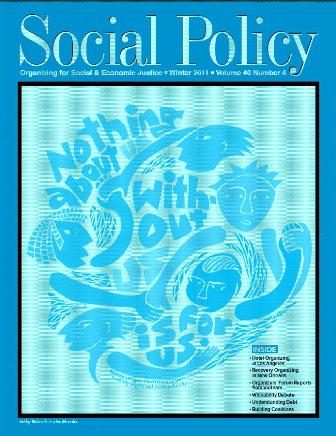
Social Policy will bring out another creative non fiction piece, "Aint I A Woman," that I originally wrote for Ampersand magazine in their Women's Day Issue. I will publish the link to that story when the next issue is out.
I have two children's stories coming out in anthologies for the ten to fourteen year old crowd. Scholastic's Christmas Stories should be in bookstores soon. You can buy it online here. Look for my story, "Saleem On Earth." Wisdom Tree is doing an anthology on school days featuring "Warp Speed" by yours truly. I'll post a link when it comes out.
Finally, you can read "Crowd at the Junction," an excerpt from my forthcoming novel, over at Pratilipi.
Finally, you can read "Crowd at the Junction," an excerpt from my forthcoming novel, over at Pratilipi.
Sunday, September 5, 2010
Footpath
Yesterday, I traveled on Khel Gaon Road in New Delhi, alongside construction for the Commonwealth Games. A footpath was being built there by hand. A six year old child brought head-loads of brick balanced on a wooden board, two bricks to a load. She seemed cheerful and sturdy as she moved between the mountainous pile of bricks she was disassembling and the woman to whom she delivered them.
I thought to myself, this is a game a child is playing to occupy herself while her mother is at work. It is a shame she must play with such heavy and dangerous weights. The contractors, the government, someone needed to have provided a crèche or school where she might assemble and disassemble the light wooden blocks meant for children’s play. Then I saw the woman look up from the ground where she had finished affixing a brick. I saw her urge the girl on. I saw the girl hurry to and back from the pile. I saw the girl tilt her head mid-run as she discovered three bricks do not balance as well as two. I saw a smile accompany this discovery and I saw her wince, as well. I saw the woman return the smile, and take the bricks from the child.
How long will it take the child to deliver the rest of the bricks? It is late afternoon. Late for the child, the woman, who is perhaps her mother. It is late now for all of us, for our nation. We walk the footpaths built by our children. We complain the footpaths buckle under our feet, the bricks laid hastily atop gravel that has been tamped poorly. The hands at work are so light.
It is late: our hearts grow harder, daily.
Tuesday, June 23, 2009
She Wants to Get Back
When I first started writing, it was an activity inextricably linked with walking. But there was a long period of walking which never resulted in writing.
I had just moved to Panchsheel Enclave in South Delhi. We moved there from Portland, Oregon. In my old life I walked as a way to escape the depression of being in the house all day. So rain or shine, and mostly rain, I bundled my three and nephew makes a fourth, into all the appropriate gear and shoved off each morning to drop the older two at school. A walk of ten to fifteen blocks, sometimes longer if, after dropping the elder two, I felt like walking further – maybe to the train yards to wave at the freight trains switching tracks. If the driver waved back, joy all around, and less guilt for me looking at rain-damp heads and noses red and running from nippy air. In those walks I communed endlessly with myself. Random fragments of narratives moved in and out of my consciousness. I turned words over, but mostly I little handled them, letting them drift into my line of vision and back out to the ether.
I made this trip to the children’s school and back thrice daily because those years there was always at least one child too young for a full day of schooling. I know I was thought the neighbourhood crazy lady. This period lasted a good six years.
Something shifted for me once in Delhi. I walked in the jungle park bordering my colony—a place, lovely and crowded, like so many in Delhi. A small search here yielded solitude. Solitude, by the way, isn’t at all the same thing as loneliness. In fact solitude is the best cure for loneliness. Walking here I found myself and again became my own best companion—the left right rhythm of walking merging my left right selves, so they spoke to each other. And this time I gave chase to the words floating into and out of me. I wanted to know where they came from and where they were headed. I was not content to think, how extraordinary, as an image emerged then vanished. I wanted to turn it over in my hands, examine it from all angles to see what made it work, and I wanted to replicate it on the page, where it would yield its meaning at my will. But what is extraordinary, when it is suspended between left and right, me and I, becomes less so on possession. I wonder sometimes if that is the way it will always be.
What shifted in the course of the Portland to Delhi move is not important to share. That the move was a homecoming had something to do with it. But it wasn’t as simple as I walked in one city and never wrote, walked in another and did. After all, I had begun writing in the weeks prior to the move. The important thing I’ve understood about writing is that walking is a way for me to enter the stories floating in my head. And the satisfaction of story is its ability to merge selves.
When I met my niece for the first time she was a year and a half and just beginning to handle words. She had a number of skits she performed using a repertoire of word-sounds. In the most hilarious of these skits her part called on her to fling her head back, to make eye contact from under slyly lowered lids, to run her tongue over the repeated sound of Ze. She sounded like an engine revving.
Ze ze ze ze ze.
The engine done revving, she paused for a beat. Then: ha ha ha ha (final emphatic) Ha.
The crisis in her performance was in the moment of the pause. A look of knowing in her eyes– the look of one about to create an effect, the look of one who knows the future.
She was a great storyteller then. I saw her again recently after a two year gap. She is three and a half now and still a story teller to learn from. She lives almost exclusively in the third person. And she sees herself in two. Watching her I recognized the way I see myself. When she wants something she has this to say: ‘She wants to give it to Ella.’ If she were a lesser story teller she would stick to ‘Give me…’ or ‘Ella wants …’
Here’s a tragedy she recounted as I played a game of blocking her way in the rather narrow hall outside my mother’s kitchen. Before I knew it, the game had crossed the point of being fun. Ella stopped darting this way and that, squealing and looking for a way around me. She looked at me with tears in her eyes and said, “She wants to get back to Ella.”
Friday, May 29, 2009
On Knowing Writers

The launches in Delhi and Mumbai were great in different ways. I really appreciate Rana and Jeet for being so generous with their time and thinking as we prepared and participated in the author discussions at each of the launchs.
I met both writers right at the start of my effort to become a writer -- three years ago. I met
them at literary festivals and at the homes of literary types, places I was skulking around in the hope of gaining insight into the business of writing. I met Rana first and Jeet a bit afterward. Both were words on the page first and very quickly and exhilaratingly people I engaged with in person. And back I went to the page again. Knowing the writer of a work while reading the work was a first for me. I remember resenting their intrusion into the work, wanting to read the book without their voices in my head, and yet and yet succumbing to the charm of the idea that I would somehow know more about the work if I knew them.

I think knowing the writer can shrink the work. The best kind of knowledge, best in the sense of it aiding a good reading of a work, is one in which the reader has access to the socio-political-economic picture of the times the writer lived in. Ideally from the distance of elapsed time. Maybe after they’re dead.
To know writers here and now as contemporaries is a lazy-making enterpise. First, there is the desire to interpret their work through the lens of the known details of their life. “Oh this story must have to do with that loss in her life etc.” To be in possession of the sense of having a true and right interpretation of a story is an experience that leaves the reader feeling powerful. Who can argue with an interpretation based on the actual author’s actual living? There can also be a certain malice in such a project. The malice of reducing the larger to the smaller. And lazy-making is the desire, fed by lit fest etc, to have the writer explain their work. Spoon feeding. I picture the infant on the high chair, head lolling, sleep setting in, belly full, the excess dribbling from mouth. How easy to not have to chew or even swallow. How easy to not have to think, to debate, to take the work and allow it to expand through collective interpretation. Ultimately a great work resonates not because of its relevance in a writer’s life, but because of its relevance in the lives of readers. Good writing carries more than the traces of one human’s limited experience. Perceptive and courageous writing is a channel for the thinking that’s preceded it, and what will follow from it.
I have to say that in the end, my loyalty to the book and not the writer.
So what I owe the writers I have met along this journey is not the access to their lives and a resultant and exalted understanding of their work but instead an understanding of what it is to be a writer. I have learned so much from the writers I have met in Delhi about my responsibility to engage not just with my writing but also with the idea of myself as a writer. It is too tempting to step back from the work and say, well, gee where did that come from? Or on encountering praise to say, well that was a fluke wasn’t it? To disclaim ownership and responsibility. Fearing criticism, to introduce a work by saying, well just dashed this off and now I’m going to impose it on you and you can’t go after me for what is flawed here because, did I mention, that I just dashed it off.
Most recently there was my own reluctance to engage in the launch activities around my
 book, a shying away from talking about the book not only because I felt shy but also because I felt I wouldn’t add to the book so much as detract from it. On different occasions, Rana and Jeet pinned me to the task at hand, which was specifically the launch and the discussions we were preparing as part of the launch, which in turn was related to the larger task of engaging with
 my writer self. No wiggling out of this one now.
Books are on sale in Delhi and in parts of Mumbai, and they should be out shortly in the rest of India. Let me know if you are having trouble finding a copy!
Subscribe to:
Posts (Atom)